VR training for the semicon industry
Preparing the next generation of semiconductor engineers through immersive learning
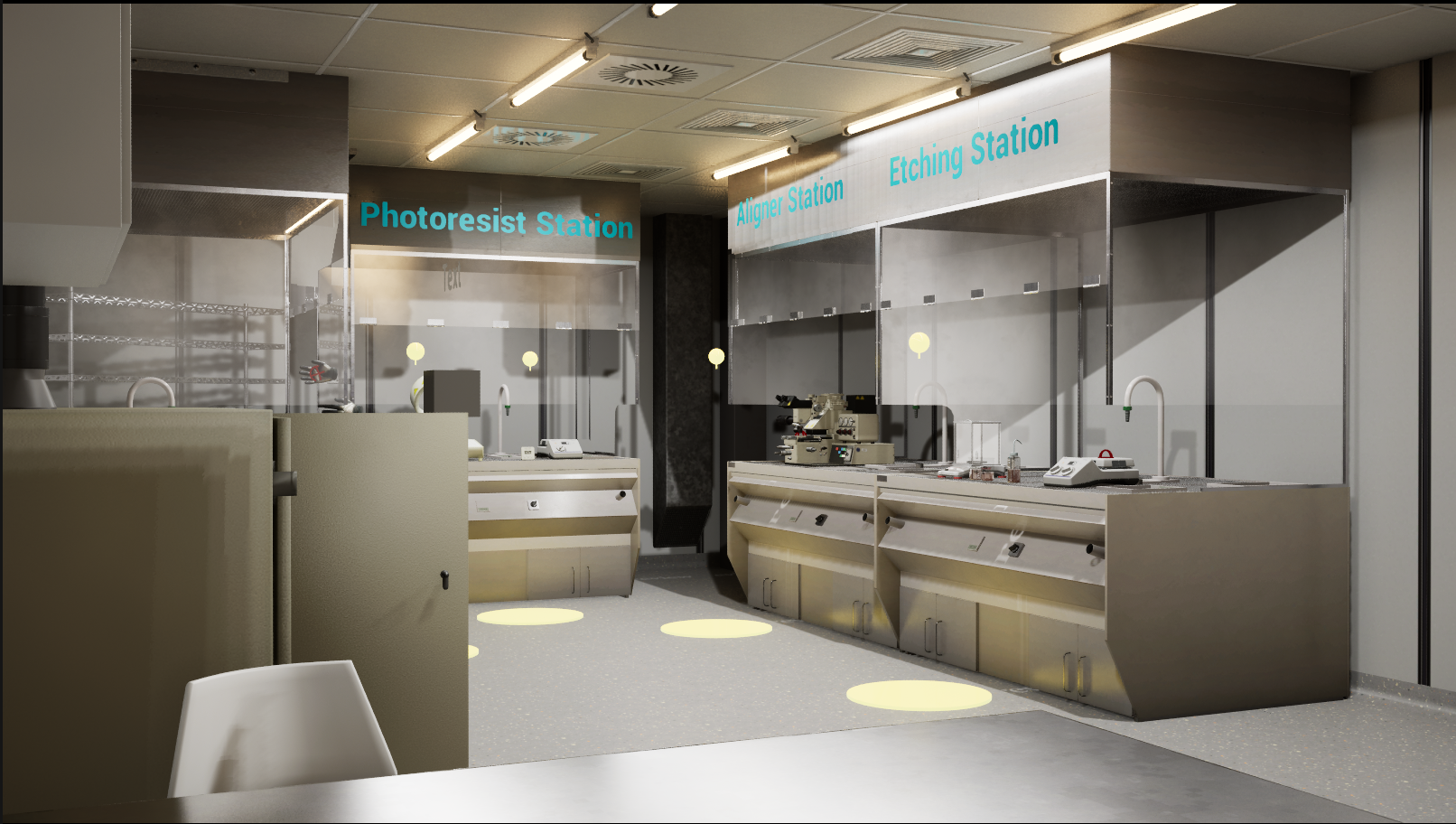
This VR training application was developed for the semiconductor industry to prepare students for working in a highly controlled cleanroom environment. Because cleanrooms are expensive to operate and have limited capacity for training, students often have few opportunities to gain hands-on experience before entering the real facility.
The Challenge
How do you prepare students for one of the world's most controlled and expensive working environments without requiring access to the real facility?
The training needed to accurately reflect cleanroom procedures while remaining engaging, scalable, and accessible for students learning complex manufacturing processes.
The Solution
To address this challenge, we created an immersive virtual cleanroom where students can safely learn the procedures involved in nanochip production. The current application focuses on onboarding new students through an interactive tutorial, with a second assessment environment currently in development that will evaluate whether trainees are ready to work in the real cleanroom. By providing accessible, repeatable training, the application helps students build confidence before entering a real production environment.
My Role
XR Design Lead • Project Lead
I combined project leadership with interaction design and close collaboration with both the client and the development team.
XR Design
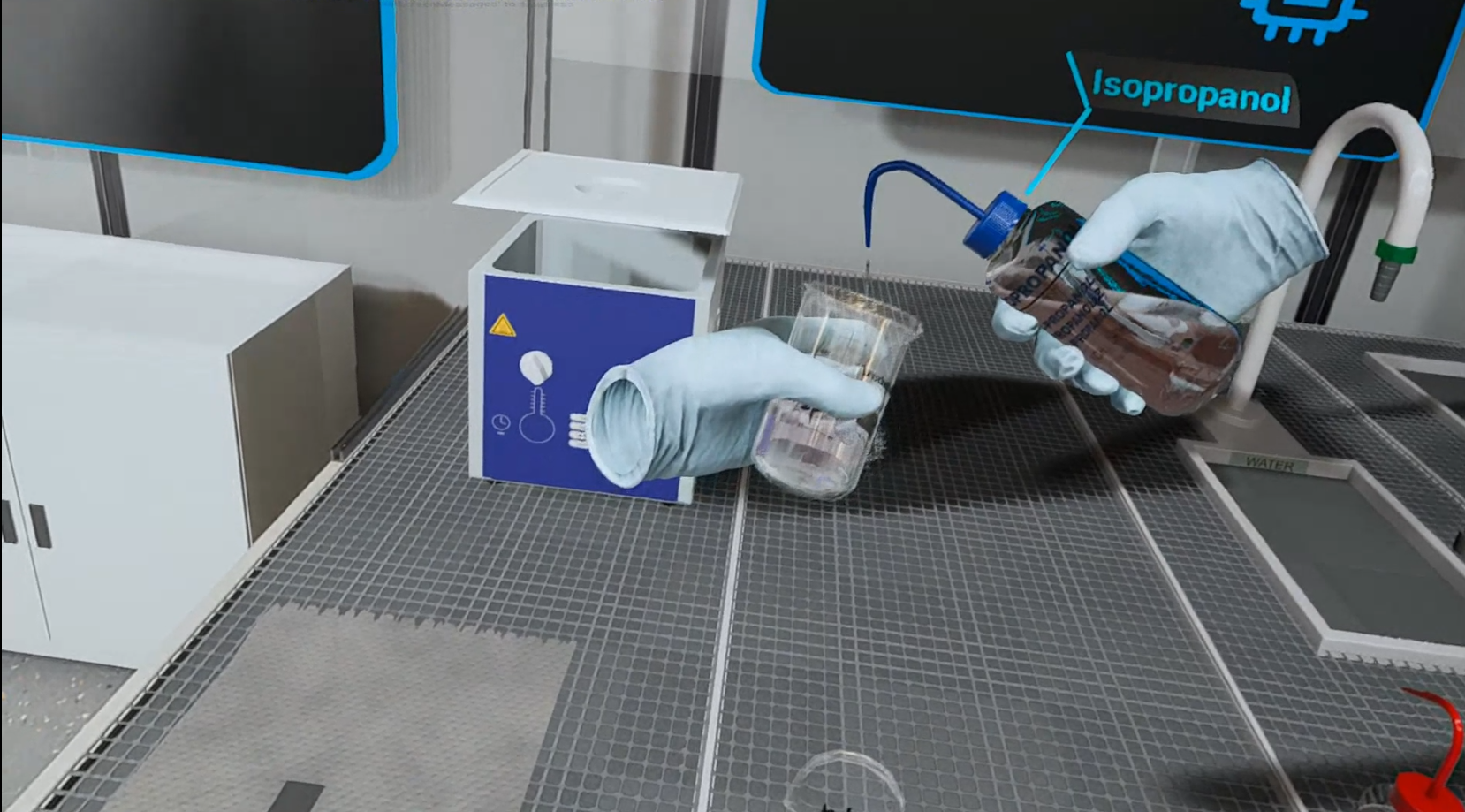
Designed and implemented VR interactions that simulate cleanroom procedures.
Helped translate complex manufacturing workflows into intuitive learning experiences.
Focused on creating interactions that were both realistic and accessible for first-time users.
Client Collaboration
Served as the primary point of contact for the client.
Worked closely with stakeholders to translate educational requirements into interactive solutions.
Project Lead
Led the multidisciplinary development team and mentored interns throughout production.
Coordinated planning and ensured the project progressed toward agreed milestones.
Helped maintain alignment between educational objectives, technical feasibility, and project scope.
User Testing
Organized and conducted user testing sessions.
Collected feedback from students and stakeholders.
Used testing insights to iteratively improve the learning experience.
Design Process
Understanding the Workflow
Working closely with industry experts, we mapped the cleanroom procedures that students need to master before entering a real fabrication facility. The goal was to identify which parts of the onboarding process would benefit most from immersive learning.
Designing for Learning
The challenge was not simply to recreate the cleanroom, but to design interactions that help students understand and remember complex procedures. Every interaction was developed to reinforce the learning objectives while remaining intuitive for users with little or no prior experience.
Iteration Through Testing
Regular user testing sessions allowed us to evaluate both the usability of the interactions and the educational effectiveness of the training. Feedback from users and stakeholders guided improvements throughout development.
Outcome
The project provides students with a safe and accessible way to practice cleanroom procedures before entering a real semiconductor fabrication facility. By reducing dependence on costly cleanroom access and offering repeatable, immersive training, the application helps improve learner confidence and better prepares students for hands-on work in the semiconductor industry.
